Industry
German and British kitchen manufacturing: what actually differs
The German-versus-British debate is usually argued on reputation. The real differences are narrower, more technical, and more useful when you are choosing a range for a specific room.
19 August 2026 · 6 min read
In this piece
Sizing systems and how they affect a room
German ranges are built around a tightly incremented modular system, which means a run can be filled with cabinets rather than with filler panels. In a room with awkward returns, that usually produces a cleaner line and more usable storage per metre.
British manufacturing has historically been more flexible on made-to-order sizes, which suits period properties where nothing is square and a bespoke width solves a problem that no module quite covers.
Carcase construction and hardware
Look past the door and at the box. Carcase thickness, edge banding, back-panel fixing and whether shelves are supported or simply pegged tell you more about longevity than any finish sample. Drawer runners and hinges are the parts a client touches thousands of times a year, and they are where a specification quietly stops being comparable.
Good examples exist on both sides. The point of specifying across several manufacturers - for us, Novelle, Schüller and Omega - is that the room decides the range, rather than the range deciding what the room can be.
Lead times and programme risk
Imported cabinetry generally arrives in a single planned delivery, which is efficient but unforgiving if a survey dimension was wrong. Domestic manufacturing can often replace a single item faster, which matters on a site where trades are booked back to back.
Neither is inherently safer. What reduces programme risk is a measured survey before ordering and a designer who checks the delivery schedule against the trade sequence, not the country stamped on the box.
How we choose between them
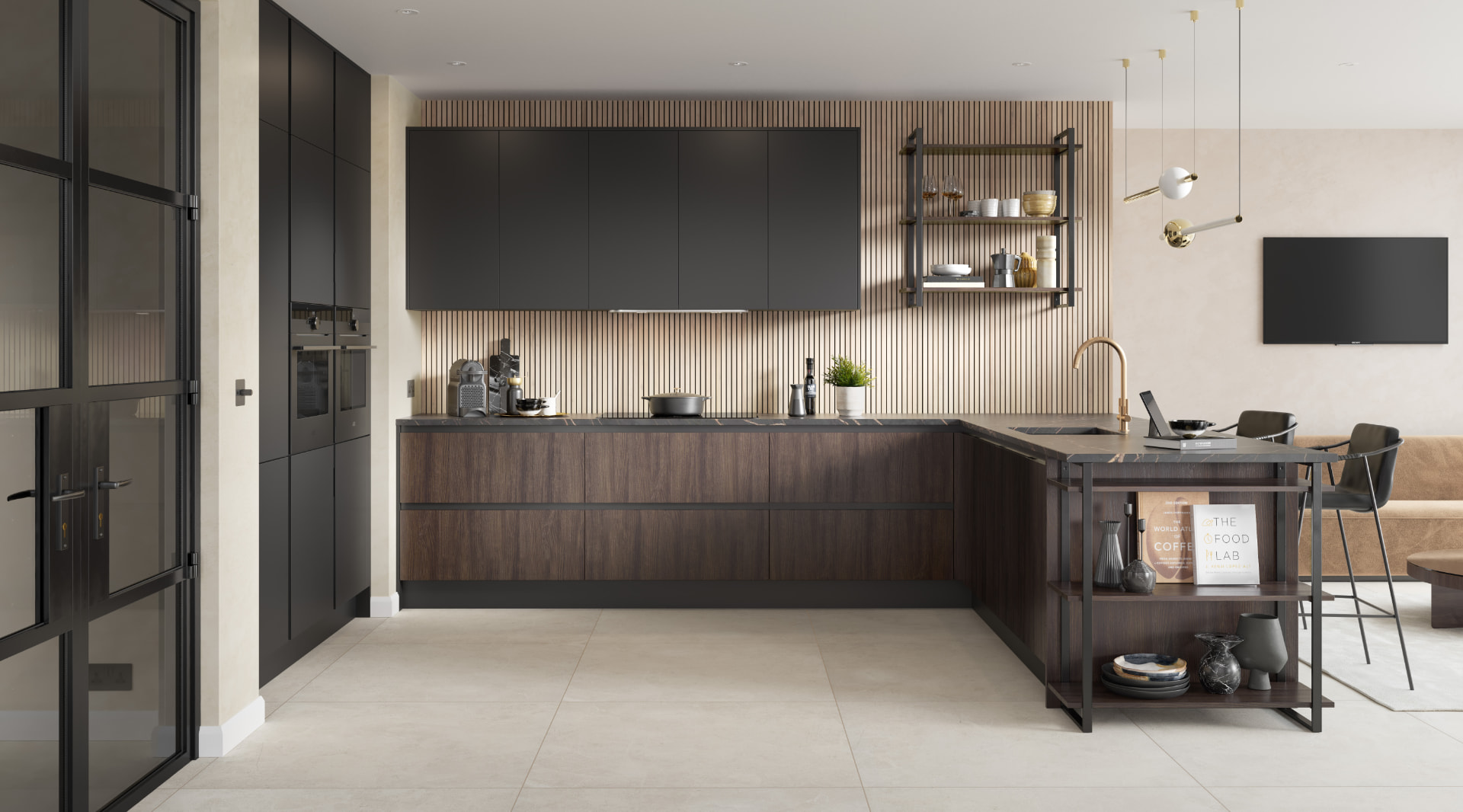
For handleless, tall-run, high-precision schemes, a modular German system usually wins on line and consistency. For period rooms, unusual widths and painted in-frame work, a British made-to-order approach often resolves the room with less compromise.
The honest answer is that both produce excellent kitchens and poor ones, depending on specification level. Comparing two quotes only means something when the carcase, hardware and worktop specifications are set side by side line by line.